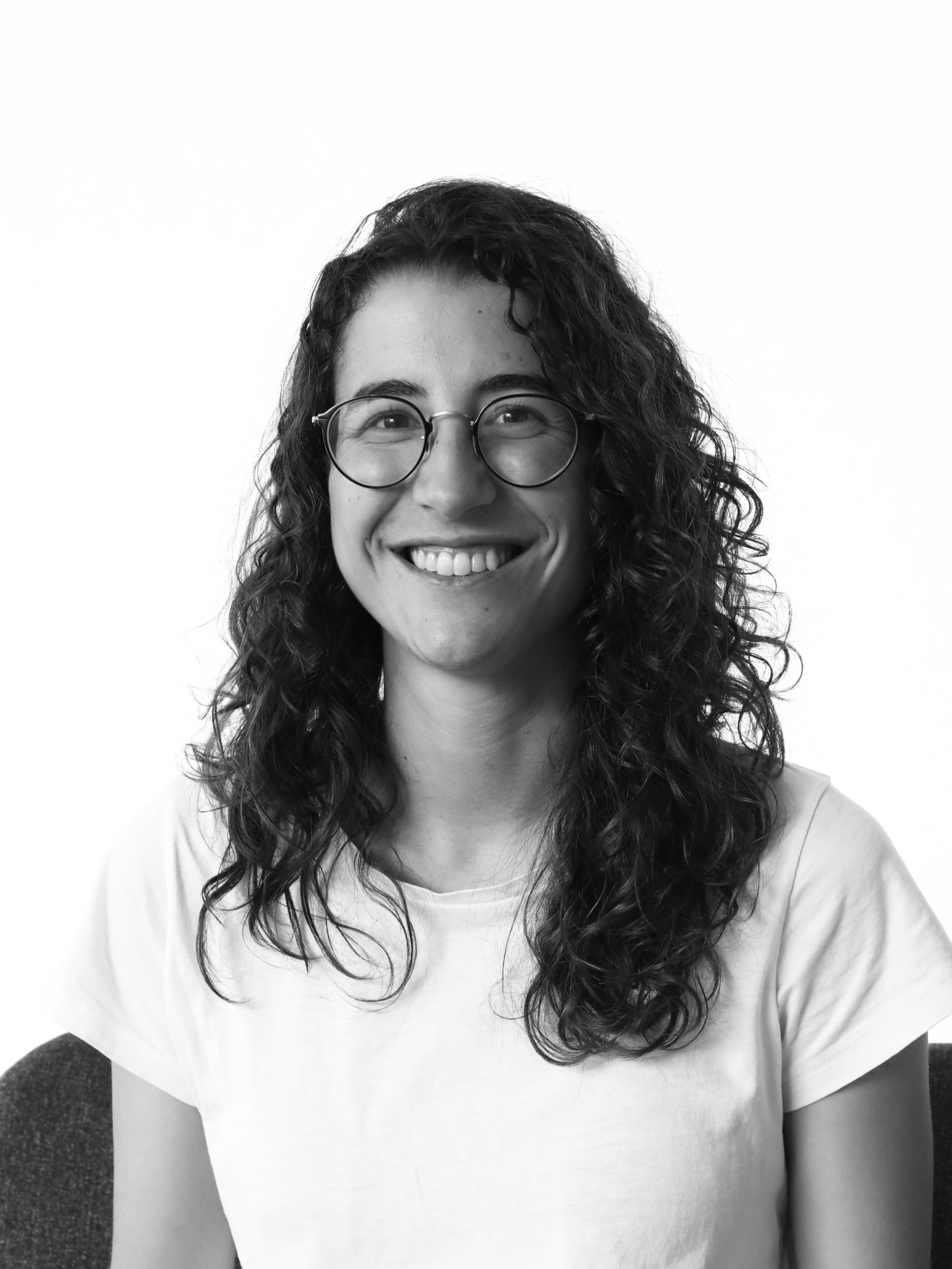
About me
Ines Ortega-Fernandez is a researcher in machine learning, cybersecurity, trustworthy artificial intelligence, and privacy-preserving technologies. Her research interests focus on interpretable and trustworthy machine learning, explainable deep learning, anomaly detection, privacy-preserving AI, federated learning security, and applied computational statistics.
She received her PhD in Information and Telecommunications Technologies from the Universidade de Vigo in 2024, awarded with Cum Laude distinction, International Mention, and Industrial Doctorate distinction, with the dissertation entitled ``Machine Learning Approaches and Explainability for Real-Time Cyberattack Detection’’. During her doctoral studies, she carried out a predoctoral research stay at the Department of Computer, Control and Management Engineering (DIAG) of Sapienza University of Rome, where she investigated reinforcement-learning approaches for the mitigation of denial-of-service attacks in smart grids.
From 2022 to May 2026, she served as Technical Manager of Data Analytics & AI at the Galician Research and Development Center in Advanced Telecommunications (Gradiant), leading multidisciplinary R&D activities in artificial intelligence, cybersecurity, privacy-enhancing technologies, and data analytics. In Summer 2026, she was selected as Research Fellow in the highly competitive MATS Program. Previously, she worked as Software Engineer at the Microsoft Canada Development Centre within the Core Data Engineering group, developing large-scale telemetry processing solutions for Windows and Azure cloud infrastructures. Earlier in her career, she also worked as research assistant at Universidad Carlos III de Madrid on biometric data-processing and privacy-related research projects. She additionally held a position as Associate Lecturer at the Department of Statistics and Operations Research at the Universidade de Vigo during 2023/2024 and 2025/2026 academic years.
Her research focuses on trustworthy and secure artificial intelligence, particularly in the areas of AI safety, privacy-preserving machine learning, explainability, and cybersecurity. She has worked extensively on anomaly and cyberattack detection for industrial and critical infrastructures, behavioral analytics (UEBA), privacy attacks and defenses in federated learning, differential privacy, and anonymization methods for sensitive data. Her work also explores interpretable and robust machine learning systems, combining modern deep learning approaches with principles from statistical modeling such as Generalized Additive Models to achieve transparency and trustworthy AI.
She strongly believes in open, transparent, and reproducible science. As part of this commitment, she has developed and maintained open-source scientific software, most notably the \texttt{neuralGAM} packages for R and Python, implementing interpretable neural generalized additive models. These tools have accumulated more than 250,000 downloads worldwide and are used for interpretable machine learning and statistical modeling applications.
During the last years, she has participated in 14 competitive European, national, and regional R&D projects, including Horizon Europe, H2020, CDTI Cervera networks, INCIBE, and Red.es initiatives, with a combined budget exceeding 60 million euros. She has acted as principal investigator, consortium coordinator, work-package leader, technical lead, and research team member in projects related to cybersecurity, privacy-preserving AI, industrial anomaly detection, big-data infrastructures, and trustworthy machine learning systems.
Her scientific contributions include peer-reviewed publications in journals as well as contributions to international conferences including ACM IH&MMSec, IEEE EuroS&PW, and JNIC. Her work has received more than 170 citations in WoS and Scopus, with a field-weighted citation impact of 1.60 (above world average). In addition, she has supervised bachelor, master, and doctoral theses in cybersecurity, privacy-preserving AI, and explainable machine learning, including award-winning student projects.
Her research activity combines machine learning, cybersecurity, telecommunications, privacy-enhancing technologies, and computational statistics in close collaboration with multidisciplinary teams from academia, industry, and public institutions. She has collaborated with companies and organizations such as the University of Vigo, Cellnex, ABANCA, INCIBE, CCN-CERT, and several European research consortia, contributing to the transfer of trustworthy AI and cybersecurity technologies into real-world applications. She has also participated in science communication and citizen-science initiatives, including the development of the collaborative environmental monitoring platform pelletMap during the 2024 Galician pellet spill crisis.
